Risk Capacity: The Hidden Factor Shaping Your Wealth Creation
Your financial ability to absorb losses, not your emotions, should drive your investment decisions.
Ramesh GovindanCo-Founder & COO
What comes to your mind when you think about investing?
Is it risk? Or return?
If yes, let's go deeper and ask a more important question: How much risk should you take while investing?
Risk capacity comes in your financial ability to absorb losses without jeopardising your lifestyle or long-term goals.
Risk capacity is not the same as risk tolerance (your emotional comfort with market ups and downs); it measures your objective financial situation.
Despite its importance, investors might overlook or misunderstand your actual risk capacity.
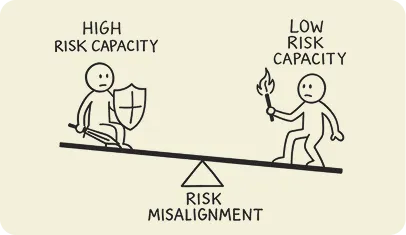
"Investors who can take risks often play it too safe, while those who shouldn't take much risk end up overexposed."
Let's explore why this happens and how it shapes your journey to building lasting wealth.
The Common Investor Mismatch
You might expect someone with high income, low debt, and a long investment horizon to take bold steps in the market.
However, chances are they can lean towards conservative products like fixed deposits or traditional insurance plans.
Why? Fear, unfamiliarity, or past bad experiences.
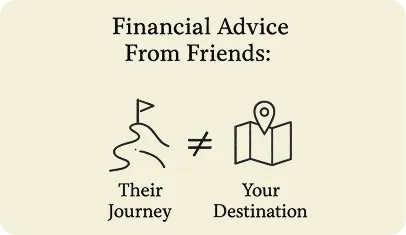
On the other hand, many investors with limited savings and tight cash flow, or nearing retirement (opens in new tab), unknowingly invest in high-risk assets, chase quick returns, act on social media tips, or follow friends' advice.
This inversion of logic, high capacity, and low risk taken is common. And it can be damaging in both cases.
How Risk Misalignment Impacts Wealth Creation
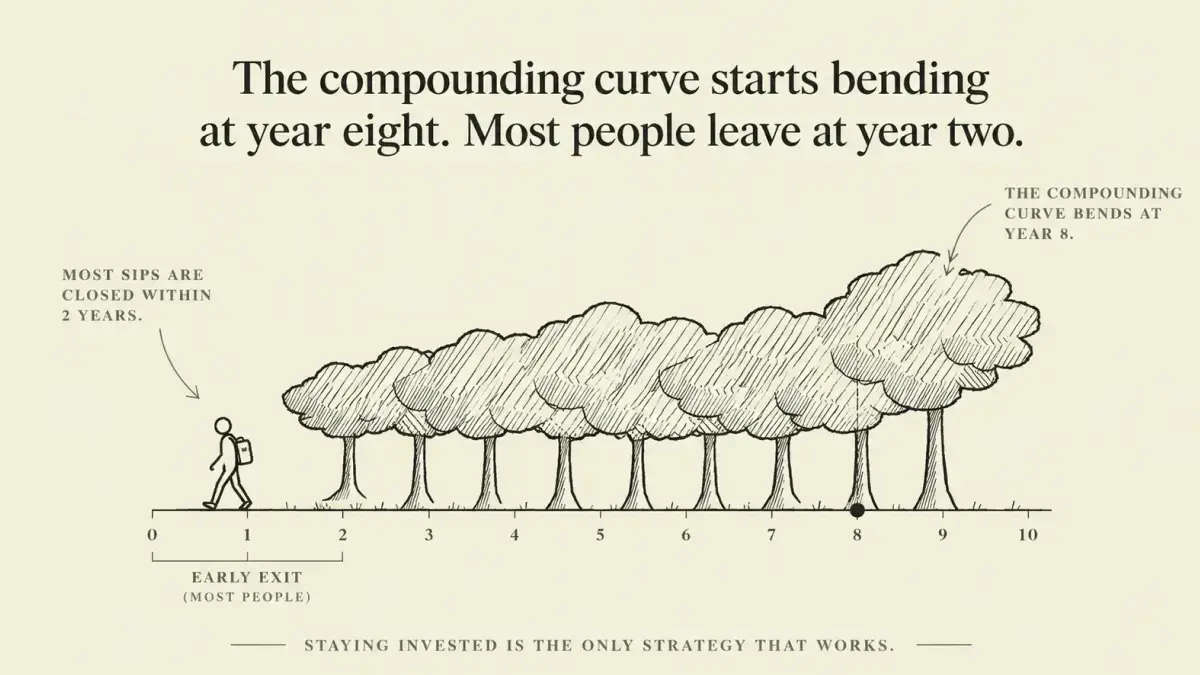
Under-risking your portfolio means missing out on the long-term compounding (opens in new tab) power of growth assets like equity. Your money stays "safe," but it also stagnates. Inflation quietly eats into its value, and you fall short of financial goals like retirement or buying a home.
On the other hand, over-risking can lead to sharp losses, often at the worst possible time. You may be forced to exit investments prematurely. If the situation gets worse, you might have to lock in losses or liquidate emergency funds.
In both cases, the core issue is not the market; it's the mismatch between your capacity and investment choices.
Aligning Risk Capacity with Your Investment Strategy
Start by objectively assessing your risk capacity. It includes your income, expenses, liabilities, goals, time horizon, and the size of your existing portfolio. A fee-based financial advisor, online tools, or a self-assessment framework can help.
Next, align your asset allocation (opens in new tab) to your true risk profile. That might mean a healthier mix of equity, debt, gold, or alternatives, based not on what's trending, but what fits your financial situation.
Avoid emotional investing. Just because markets are volatile doesn't mean you should pull out. Just because a friend made 2x returns doesn't mean you should copy them.
Finally, review regularly. Life changes, promotions, children, and relocations affect your capacity. So should your investment plan.
Takeaway
Risk capacity is not about fear or greed because it is about financial reality. Aligning your investments to this reality ensures that you're building wealth in a way that's sustainable, stable, and suited to you.
It all starts with knowing how much risk you should take, not just how much you feel like taking.
Written by
Co-Founder & COO30+ years' experience
Over three decades across debt markets, mutual funds, and investment advisory. Former stints at Darashaw Securities, Kotak Mahindra Mutual Fund, and Entrust Family Office. At Karat Capital, he ensures that every feature, every communication, and every recommendation stays on the right side of SEBI regulations, so investors never have to wonder.
Reviewed by
Founder & CEO30+ years' experience
Two and a half decades of advising clients and investing proprietary capital across market cycles. Built his investment philosophy at HDFC Bank and Kotak Mahindra Bank, then co-founded Entrust Family Office where he worked closely with high net worth families on long term wealth planning. That experience revealed a gap: quality advisory was only accessible to the ultra-wealthy. Karat Capital Advisors was set up in 2020 to bring that same rigour and discipline to every serious investor.