Only 1 in 4 Indians has a credit score above 750. This is what the other 3 are paying for it.
Only 1 in 4 Indians has a credit score above 750. Here is exactly what the other 3 are paying for it: in EMIs, in lost investments, and in decades of compounding.
Ramesh GovindanCo-Founder & COO

Banks do not tell you this. But your credit score (opens in new tab) quietly determines what you pay for every rupee you borrow.
Nobody announces it when your loan gets approved. The bank does not send a letter saying you paid more than you had to. The extra amount just gets folded into your EMI, month after month, for twenty years — and most people never realise it was avoidable.
What credit score is needed for the best home loan rate in India?
In India, a credit score above 750 (rated by CIBIL (opens in new tab), Experian, or CRIF) typically qualifies a borrower for the most competitive home loan (opens in new tab) interest rates. Lenders treat 750+ as the threshold for prime borrower status: lower rates, faster approvals, and in many cases, negotiating power on processing fees. Only 23% of Indian borrowers maintain a score above this level. (Source: TransUnion CIBIL)
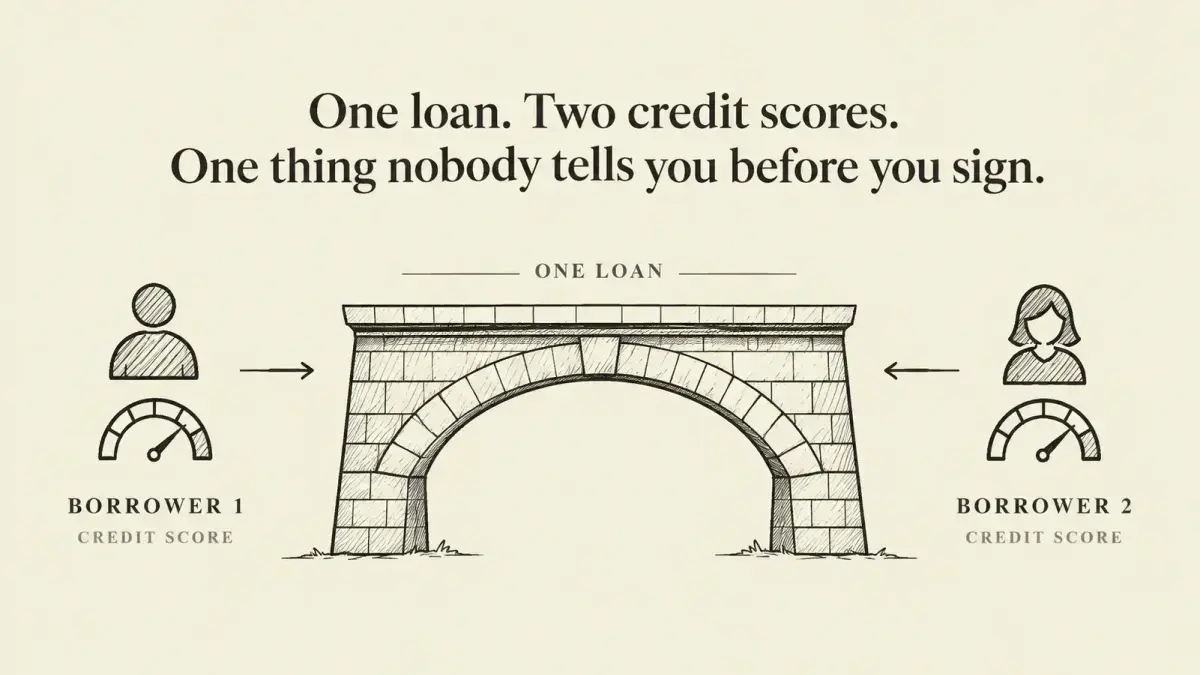
Here is what is actually happening. When two people walk into the same bank and apply for the same ₹60 lakh home loan, the bank gives them different prices. Not different products. The same loan. A different rate — based almost entirely on their credit score. The person with a score above 750 gets 8.50%. The person below 700 gets 9.50%. That one percentage point does not sound like much. Over twenty years it is ₹9,26,035.
That is real money. Paid to the bank. Not invested. Not saved. Gone.
But the number that should really stop you is not ₹9 lakhs. It is ₹35 lakhs.
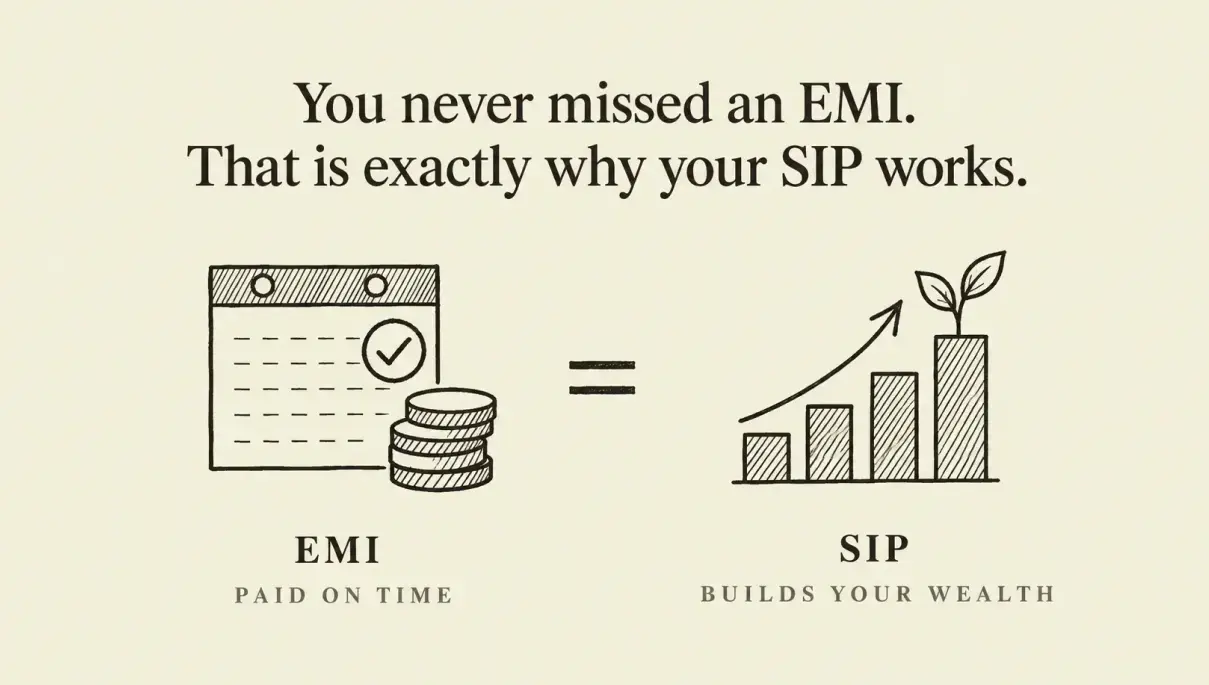
Because that extra ₹3,858 a month (the difference between what the two borrowers pay) did not have to go to the bank. It could have gone into an equity SIP (opens in new tab). At 12% CAGR (opens in new tab) over the same twenty years, it would have built ₹35,48,810. Between the interest paid extra and the wealth never built, a lower credit score can cost upwards of ₹44 lakhs on a single home loan.
Not because of a missed payment. Not because of a default. Just because the score was not where it could have been.
Only 23% of Indian borrowers maintain a score above 750. That means roughly 3 in 4 people are paying more than they need to — on every loan, for the entire tenure, without knowing it. The gap between knowing this and doing something about it is a behavioural problem as much as a financial one — and one of the most expensive gaps an urban professional in India can leave unaddressed. (Source: TransUnion CIBIL)
The score is not a grade. It is a price tag. And it is already attached to every financial product you will ever use.
Three things worth knowing
1. The rate difference is real and it compounds. A 1% difference on a large loan over a long tenure is not a rounding error. It is lakhs. Check what rate you were actually offered on your last loan and compare it to the best available rate. The gap tells you what your score cost you.
2. The best borrowers get chased, not the other way around. At 750+ lenders compete for your business — matching rates, waiving processing fees, offering pre-approved products. Below that threshold the balance of power flips entirely.
3. The score you have today is the price you pay tomorrow. Every loan you will ever take (home, car, top-up, personal) is priced off a number you are building right now. The time to improve it is before you need it, not when you are sitting across the table from a lender.
A credit score is not a bureaucratic formality. It is the single number that determines what your money costs — and by extension, how much of it you get to keep. The difference between a good score and an average one is not approval. It is ₹44 lakhs and that too on one loan. At time.money, your Credit Wellness score shows you exactly where you stand — and what it is quietly costing you.
Disclaimer: This article is for informational and educational purposes only and does not constitute investment advice. All calculations use a ₹60 lakh home loan over 20 years (8.50% vs 9.50% p.a.) and are illustrative — not a guarantee of future outcomes. Rate data sourced from SBI/LIC HFL published rates. Credit score distribution data sourced from TransUnion CIBIL. SIP projections use 12% CAGR and are not a guarantee of returns. Past performance is not indicative of future results. Please consult a SEBI-registered investment advisor before making any financial decisions. time.money is registered with SEBI as an Investment Advisor (INA200015219).
Written by
Co-Founder & COO30+ years' experience
Over three decades across debt markets, mutual funds, and investment advisory. Former stints at Darashaw Securities, Kotak Mahindra Mutual Fund, and Entrust Family Office. At Karat Capital, he ensures that every feature, every communication, and every recommendation stays on the right side of SEBI regulations, so investors never have to wonder.
Reviewed by
Founder & CEO30+ years' experience
Two and a half decades of advising clients and investing proprietary capital across market cycles. Built his investment philosophy at HDFC Bank and Kotak Mahindra Bank, then co-founded Entrust Family Office where he worked closely with high net worth families on long term wealth planning. That experience revealed a gap: quality advisory was only accessible to the ultra-wealthy. Karat Capital Advisors was set up in 2020 to bring that same rigour and discipline to every serious investor.